Close
Skip to content
  • LandSeaLot Stories
    • Articles
    • News
    • Newsletters
    • Explainers
  • Events
  • Gallery
  • Outputs
    • Deliverables
    • Resources
    • LandSeaLot Zenodo
Subscribe to newsletter
  • About
    • About LandSeaLot
    • Objectives
    • Partners
    • People
    • Work Plan
    • Research Infrastructures
  • Integration Labs
    • About
    • Factsheets
  • Communities
    • LandSeaLot Communities
    • Citizen Science Hub
    • Training Academy
  • Cost effective technology
    • About
    • Low-cost tech purchase
    • Partners’ reserved area
  • About
    • About LandSeaLot
    • Objectives
    • Partners
    • People
    • Work plan
    • Research Infrastructures
  • Integration Labs
    • About
    • Factsheets
  • Communities
    • LandSeaLot Communities
    • Citizen Science Hub
    • Training Academy
  • Cost Effective Technology
    • About
    • Low-cost tech purchase
    • Partners’ reserved area
  • LandSeaLot Stories
    • Articles
    • News
    • Newsletter
  • Events
  • Gallery
  • Subscribe to newsletter
  • Outputs
    • Deliverables
    • Resources
    • LandSeaLot Zenodo

Scientists, fishers and local authorities expand river–sea monitoring in the Evros Delta

  • October 8, 2026

LandSeaLot teams complete their September field mission in Alexandroupoli. With thanks to HCMR.

From 11 to 17 September 2026, researchers from the Hellenic Centre for Marine Research (HCMR) and the Democritus University of Thrace (DUTh) returned to Alexandroupoli, Greece, to extend the LandSeaLot observation network in the Evros River and Delta. The mission built upon the collaboration established with local communities the previous autumn, bringing together local fishers, the Management Unit of Evros Delta and Dadia National Parks, and regional authorities.

This time the work moved beyond introductory training. Local partners were already familiar with the tools and methods, so the focus moved toward making the network denser and more parameter-rich.

Gulf of Riga near the mouth of the Daugava River
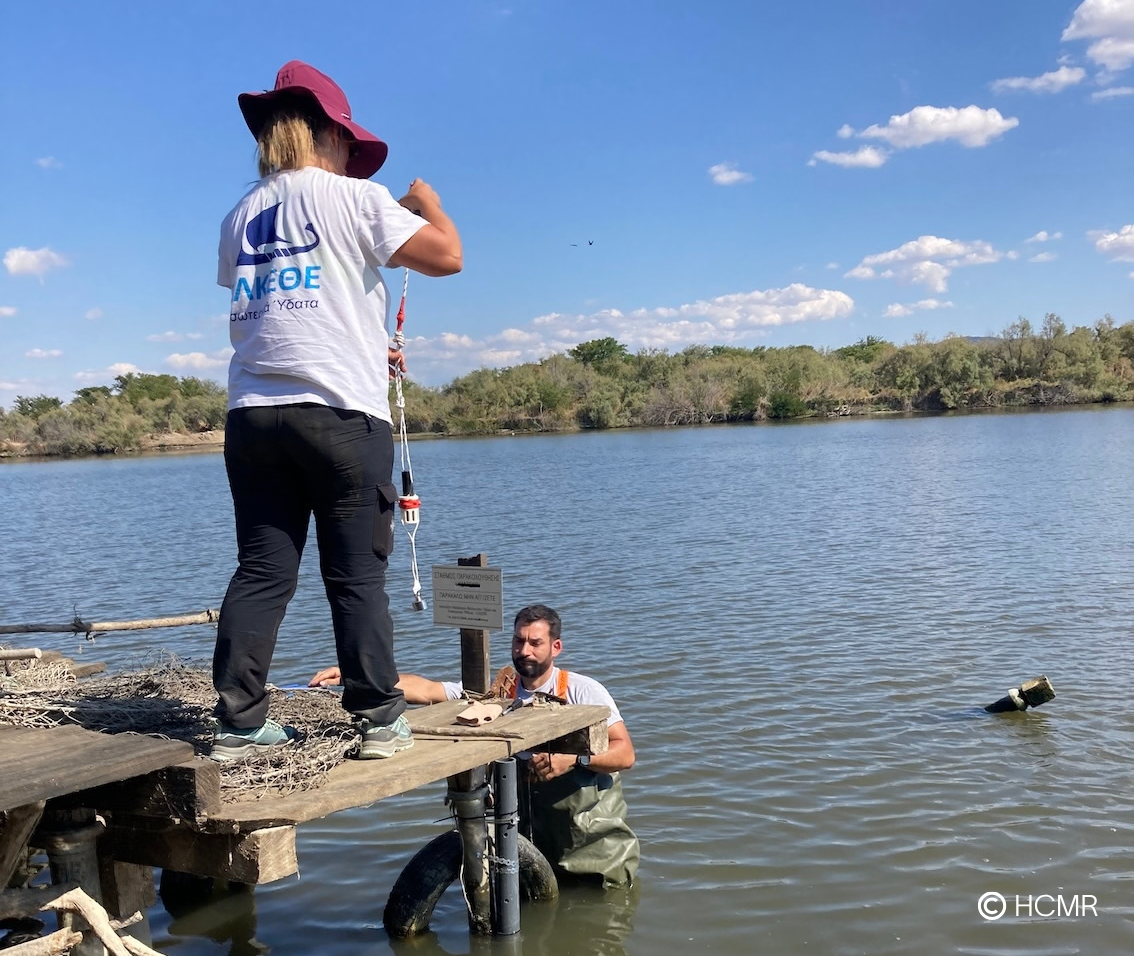
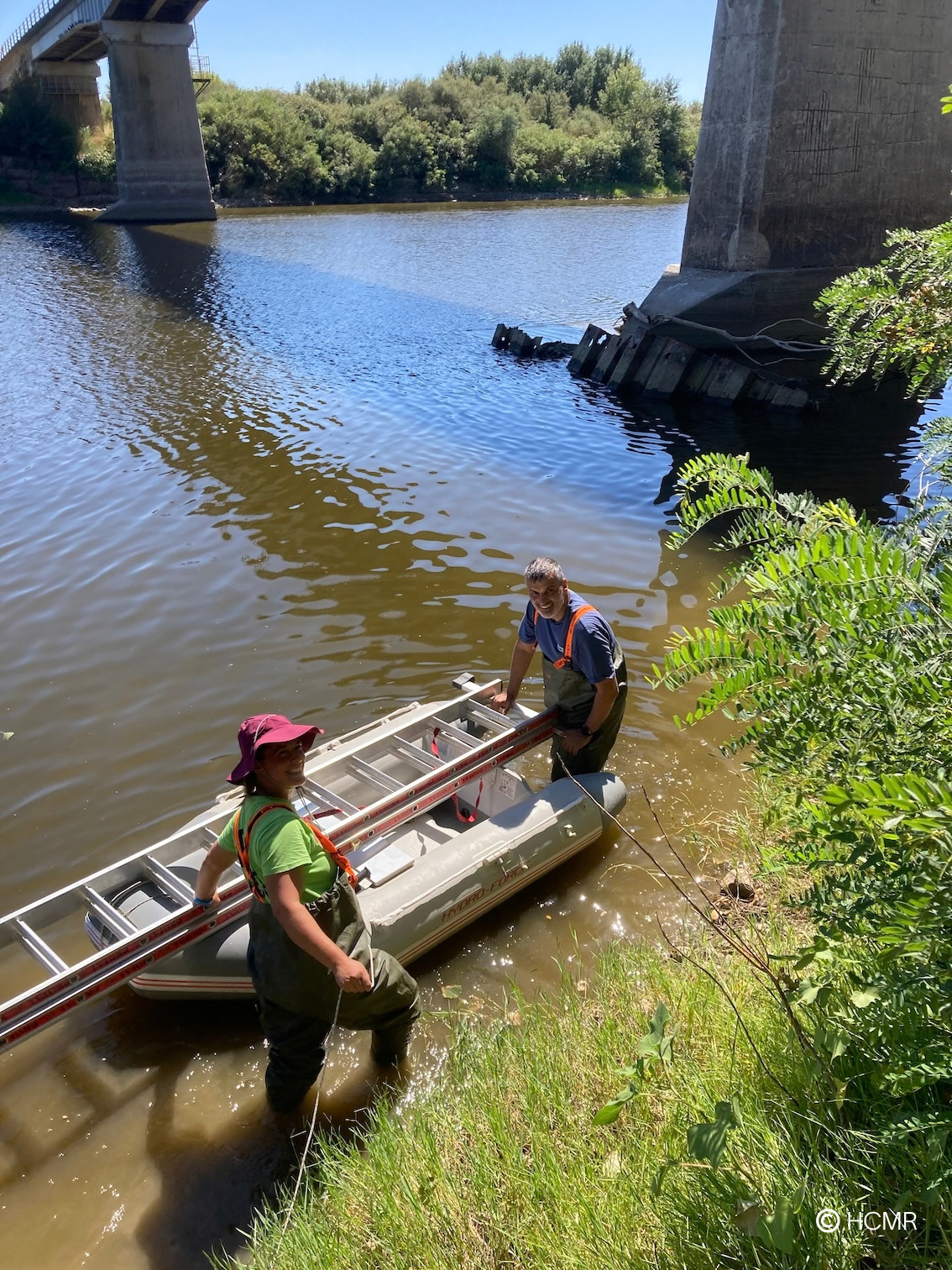
HCMR installing sensors in the Evros River. Credit: HCMR.

Co-designing the sensor network

On 14 September, the research team met Management Unit staff at the Evros Delta Information Centre. Together they selected the locations for a new set of miniaturised CTD (conductivity–temperature–depth) sensors. A hands-on session followed on 16 September to train local staff in the operation and maintenance of the sensors after their installation. Two additional sensors were given to the Management Unit to support the long-term sustainability of the network.

What was done in the field?

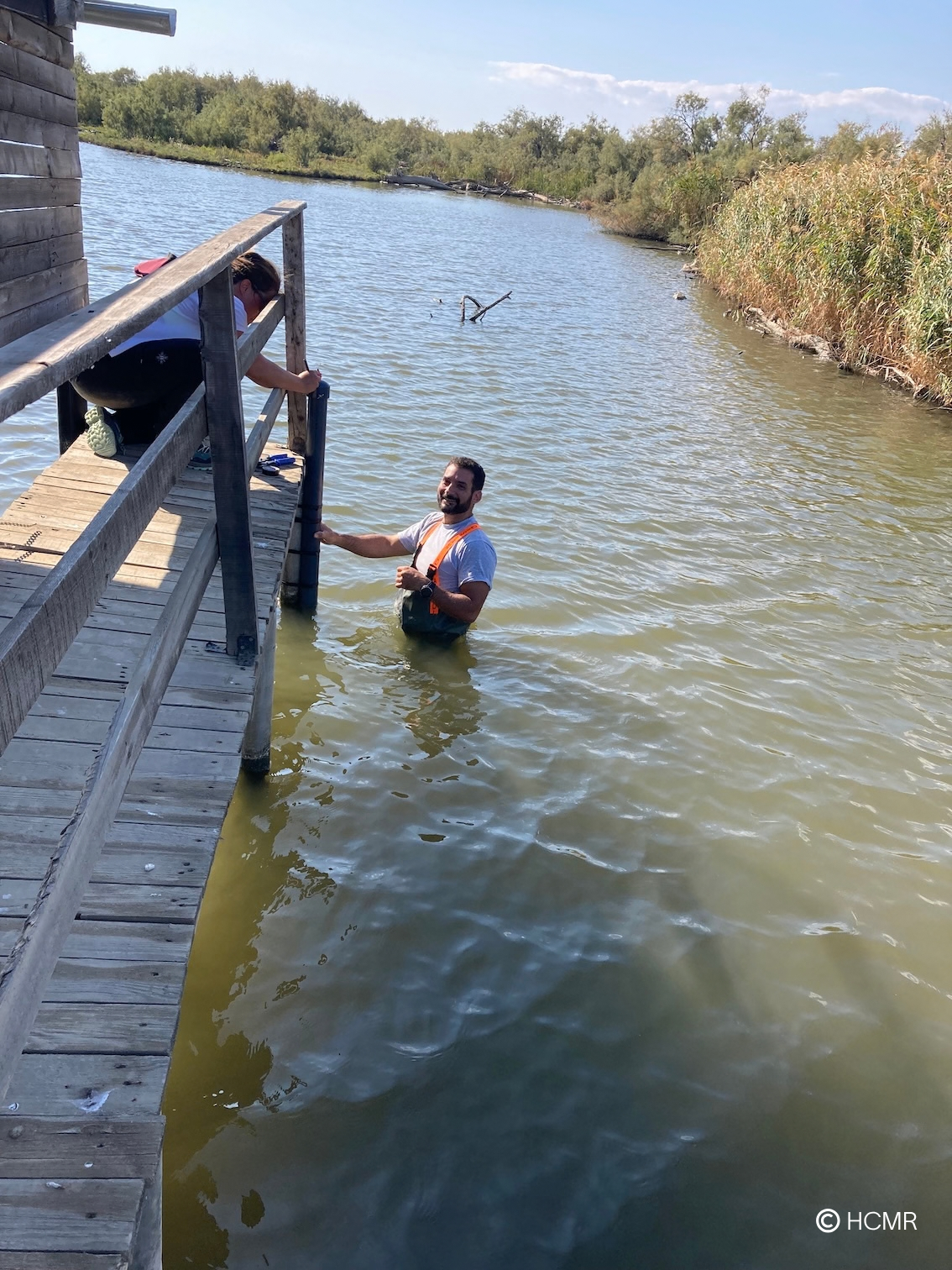
• Saltwater intrusion monitoring: Miniaturised CTD sensors were installed at five sites along the lower Evros River. They will track how seawater moves upstream and changes through the river–delta system. This information matters for protecting freshwater and delta ecosystems and for managing agricultural water, since river water is widely used to irrigate nearby farmland in summer.

• Water quality and nutrients: At the existing monitoring platform, the team reinstalled a probe that measures temperature, salinity, dissolved oxygen and pH. They also installed a nutrient analyser and a miniaturised sensor that measures temperature, salinity and pressure. Together, these instruments give new insight into nutrient dynamics where the river meets the sea.

Gulf of Riga near the mouth of the Daugava River
Sensor installations in the Evros River. Credit: HCMR.

• Water level: Radar water-level sensors were installed on the Erythropotamos and Ardas rivers, at the sites where cameras for monitoring macroplastics are already operational. Water-level data alongside the camera records will help explain how river flow drives the transport of plastic litter through the basin.

• Microplastics sampling: Manta net sampling continued at three sites: in front of the Evros Delta, in coastal waters off the port of Alexandroupoli, and in the river itself.

Driven by the community

Gulf of Riga near the mouth of the Daugava River
Sensor installations in the Evros River. Credit: HCMR.

Local stakeholders showed strong commitment during the visit. The regional fishers’ association proposed an additional sensor site and offered to help with its installation. The team and the Management Unit are now looking into this proposal, which reflects the co-design approach at the heart of LandSeaLot.

Next steps

The team also used the visit to start planning the LandSeaLot Week with local communities and stakeholders. The event will take place in Alexandroupoli in April 2027.

With a denser and more varied set of instruments, the September mission was a step forward in developing the LandSeaLot monitoring system. The collected data will help the Evros Delta Management Unit and regional authorities to better respond to seawater intrusion and pollution inflows. They will also improve scientific understanding of the hydrological and ecological processes that shape this unique land–sea interface.

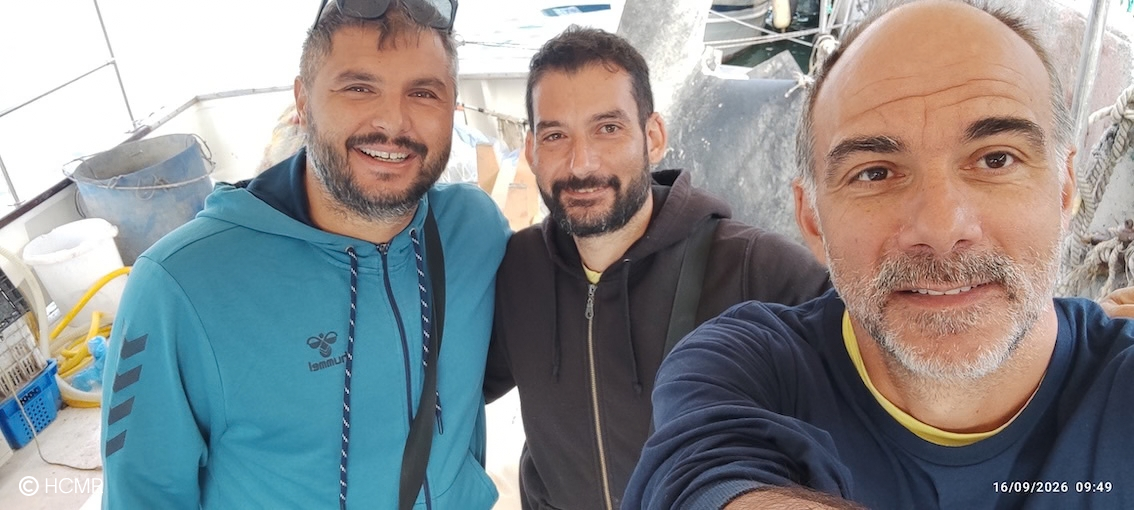
Members of the LandSeaLot team at HCMR. Credit: HCMR.

Share:

Comments are closed

BE PART OF THE CONVERSATiON!

JOIN THE COMMUNITY

LandSeaLot has received funding from the European Union’s Horizon Europe Framework Programme for Research and Innovation under grant agreement No 101134575. Views and opinions expressed are however those of the author(s) only and do not necessarily reflect those of the European Union or European Research Executive Agency. Neither the European Union nor the granting authority can be held responsible for them. UK participants in Horizon Europe Project LandSeaLot are supported by UKRI grant numbers: 10109592 University of Stirling and 10107554 Plymouth Marine Laboratory.

©2026 LandSeaLot | Privacy Policy | Cookie Policy | Website by Seascape Belgium

Manage Consent

To provide the best experiences, we use technologies like cookies to store and/or access device information. Consenting to these technologies will allow us to process data such as browsing behavior or unique IDs on this site. Not consenting or withdrawing consent, may adversely affect certain features and functions.

Functional Always active
The technical storage or access is strictly necessary for the legitimate purpose of enabling the use of a specific service explicitly requested by the subscriber or user, or for the sole purpose of carrying out the transmission of a communication over an electronic communications network.
Preferences
The technical storage or access is necessary for the legitimate purpose of storing preferences that are not requested by the subscriber or user.
Statistics
The technical storage or access that is used exclusively for statistical purposes. The technical storage or access that is used exclusively for anonymous statistical purposes. Without a subpoena, voluntary compliance on the part of your Internet Service Provider, or additional records from a third party, information stored or retrieved for this purpose alone cannot usually be used to identify you.
Marketing
The technical storage or access is required to create user profiles to send advertising, or to track the user on a website or across several websites for similar marketing purposes.
  • Manage options
  • Manage services
  • Manage {vendor_count} vendors
  • Read more about these purposes
View preferences
  • {title}
  • {title}
  • {title}